When A Licensed Contractor Is Needed
Much work on loose insulation, sprayed coatings and pipe lagging requires a licensed contractor. Work on asbestos insulation board can also be licensable, depending on the task and exposure assessment. Do not decide from the product name alone.
HSE distinguishes licensed work from non-licensed work and notifiable non-licensed work. These categories have different requirements. An ordinary construction qualification or asbestos awareness certificate does not authorise someone to undertake licensed removal.
Ask to see the appointed contractor’s current HSE asbestos licence and check that it covers the work. This website does not claim a licence of its own. The contractor’s competence, resources and plan of work must be appropriate for the specific site.
Scope The Removal Before Booking Trades
Provide the survey and marked drawings, including report exclusions. The removal boundary should describe each material, its location and extent. Hidden insulation, connected ducts and adjoining voids can affect how the enclosure is formed and how the job is phased.
A written plan of work should explain the controls, access arrangements, decontamination, waste route and emergency procedures. Agree service isolations and occupation restrictions before mobilisation, with responsibility assigned to named project roles.
Licensed work normally requires advance notification to the enforcing authority. Do not assume a proposed construction start date allows enough time for notification, preparation and independent clearance. Any lawful exception or waiver must be addressed by the responsible contractor and authority.
Containment, Removal And Clearance
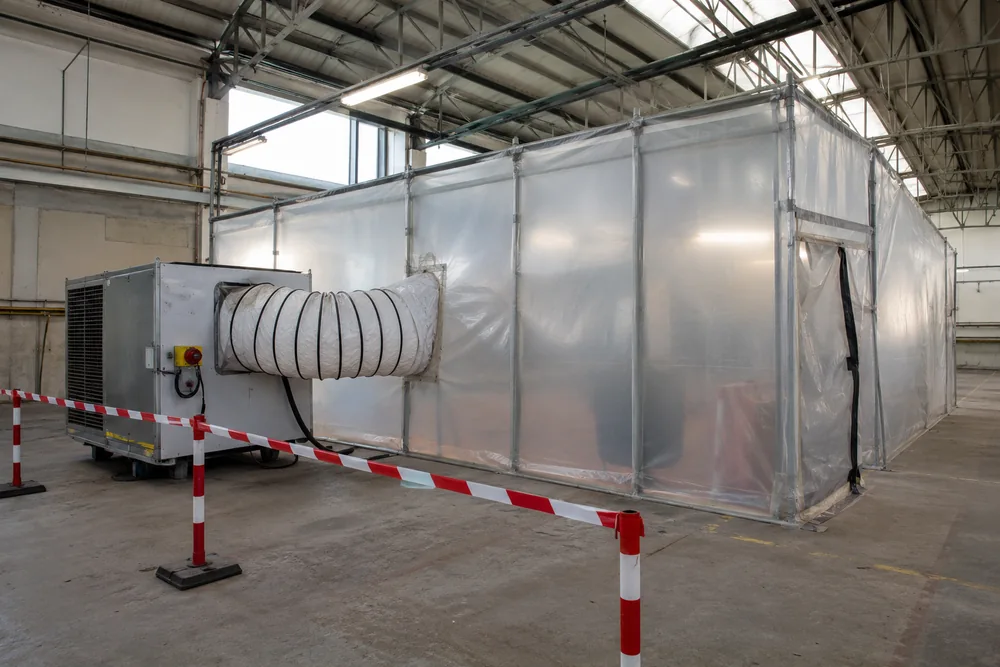
Depending on the task, controls can include a sealed enclosure, negative pressure equipment, controlled wetting and dedicated decontamination facilities. These are specialist arrangements selected through the assessment, rather than a universal checklist that makes any job safe.
Keep building users and other trades outside the controlled work area. Loading routes, emergency exits and neighbouring activities need consideration while the work takes place. Changes to the scope should trigger a review before removal continues.
For enclosure work requiring four-stage clearance, a suitably accredited analyst assesses completion and issues the relevant certificate of reoccupation after successful clearance. HSG248, Asbestos: The Analysts’ Guide, describes the analytical framework. Allow for a failed inspection or additional cleaning in the project programme.
Quote And Handover Requirements
The amount of material is only part of the cost. Enclosure complexity, access, service isolation, welfare arrangements, waste volume and independent analytical work can all affect the quotation. Operational restrictions may also require phased work.
Ask which items are included and who appoints the analyst. An explicit arrangement for independent assessment gives the client a clearer handover than a vague promise that a room will be cleaned. Confirm reinstatement and replacement building work separately.
Retain the agreed scope, completion information, analytical certificates where applicable and hazardous waste consignment records. Update the asbestos register to show what was removed and what remains. Clearance of one enclosure does not remove the need to manage asbestos elsewhere in the premises.
The Steps To A Defined Scope
First, send the available asbestos information and explain the work you intend to carry out. We review the request and identify whether testing, a wider survey or a site assessment is needed before a reliable proposal can be prepared.
Next, the appointed specialist confirms the task, work category and access requirements. Review the written scope, exclusions and required handover records before accepting a quotation. Keep the relevant building users and contractors informed so that no one starts conflicting work.
Finally, retain the completed records and use them to update your site information. If the scope changes or further suspect materials are found, stop and reassess that part of the project. Do not treat an earlier result or quotation as permission to disturb something it did not cover.
Licensed Removal Questions
What Should I Prepare For Licensed Removal?
Licensed Asbestos Removal enquiries should include the premises address, building use and any relevant survey or test report. Describe the material and the work you want to arrange, along with access restrictions and occupied areas. Use information you already hold, and leave suspect materials undisturbed while the scope and next steps are assessed.
How Is The Licensed Removal Programme Agreed?
Licensed Asbestos Removal scheduling depends on the confirmed scope, access arrangements and any legal notification or analytical requirements. Tell us about your construction dates and operational restrictions at enquiry stage. The appointed specialist should explain the sequence and dependencies in writing before dates are fixed, including how unexpected materials or additional work will be handled.